
Header

Smart school of the future: curricula, recommendations, and security

We develop students' digital competencies, build a smart recommendations system and strengthen cyber security – ethically, safely and in accordance with EU regulations
News
How to teach AI?

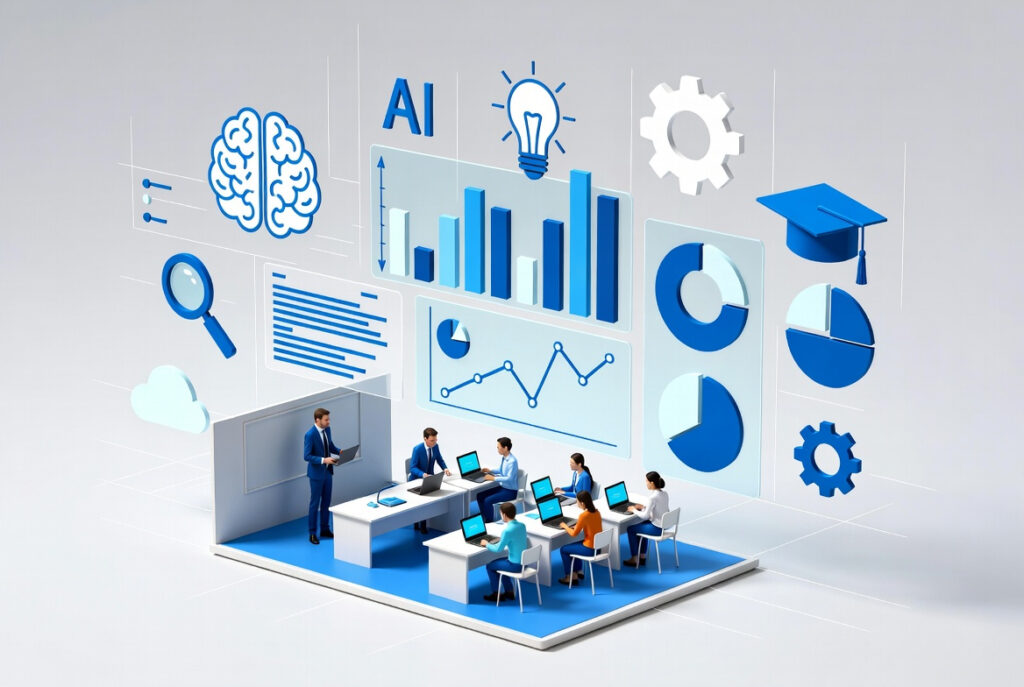
The curriculum "Artificial Intelligence: From Concept to Application" is an educational program aimed at strengthening and developing students' competences necessary for understanding artificial intelligence, its application in everyday life, and its impact on human lives.

Extracurricular activities curriculum for 5th and 6th grade elementary school students
Learn more
Extracurricular activities curriculum for 7th and 8th grade elementary school students
Learn more
Curriculum for an optional course for 2nd and 3rd grade high school students
Learn more

Papers

What do teachers say?

“I have been participating in CARNET's BrAIn project since the very beginning of its implementation, and this is my second year of active work on the new curriculum. From a teacher's perspective, I can emphasize that the curriculum is of exceptional quality, well-structured, and at the same time flexible enough to easily adapt to different levels of students' prior knowledge and teaching contexts. Its greatest value is its strong focus on practical application - it provides teachers with clear guidelines, but also the freedom to design activities that are understandable, motivating, and meaningfully connected to real life for students. I consider the emphasis on the ethical, safe, and responsible use of AI and the systematic development of critical thinking to be particularly important. Students do not use AI uncritically, but learn to recognize the limitations of technology, reflect on authorship, privacy, and the impact of AI on society. Such an approach not only develops digital skills, but also responsible, aware, and active users of technology, which makes the BrAIn curriculum extremely valuable for modern teaching.”

Dalia Kager, Osnovna škola Eugena Kvaternika, Velika Gorica

“Through a variety of activities, students developed critical thinking, creativity, and digital competencies, and for me, the BrAIn curriculum opened up new perspectives and enriched teaching with fresh ideas and approaches. Thanks to its flexibility, structured and elaborated outcomes, alignment with scientific research, and the content and recommendations it brings, this curriculum provides teachers with security and freedom in designing their teaching, and students with a stimulating environment for research, creation, and development of 21st century competencies, making it an experience that I would gladly recommend to my colleagues.”

Sanja Pavlović Šijanović, Gimnazija Vukovar

“Artificial intelligence is transforming education and is essential in preparing students for the challenges and opportunities that lie ahead. Educators must weigh the benefits against the risks and ethical considerations to create an educational environment that fosters learning without compromising student well-being. AI tools enable more dynamic and effective educational environments. As students prepare for a future increasingly influenced by technology, it is important to foster an educational atmosphere that promotes adaptability, critical thinking, and collaboration.”

Marina Mirković, Tehnička škola, Požega

"The BrAIn project improved the teaching process by creating a personalized, interactive and stimulating learning environment with the help of artificial intelligence, which achieves faster and deeper conceptual understanding of content in STEM subjects in eighth grade. The project encourages active and independent learning among all my students, while reducing the need for parent and teacher involvement."

Tanja Paris, OŠ Vijenac, Osijek

"Artificial intelligence is a turning point for our school. It's a revolution in accessibility, and this project is taking us forward. For students with visual impairments, artificial intelligence is not just technology; it's a bridge. It allows their future to be determined by their abilities, not their disabilities."

Marko Milak, Centar za odgoj i obrazovanje "Vinko Bek", Zagreb

Tools