

The increasing use of Artificial Intelligence in education and other fields demonstrates that the quality of results depends heavily on the quality of the instructions provided. Vague or overly general prompts often lead to content that is difficult to apply in practice. The PARTS framework offers a simple and structured way to design prompts, helping users more clearly define the goal, context, and expected outcome when working with AI tools and systems.
What is the PARTS Framework?
The PARTS framework is a structured template for designing prompts intended for AI interaction. It consists of five key elements:
- Persona (Role) - the specific role or identity the AI should adopt.
- Activity (Task) - the specific action the AI needs to perform.
- Recipient (Audience) - the person or group for whom the content is intended.
- Topic (Content) - the subject matter or material being addressed.
- Structure (Format) - the format and style in which the results should be presented.
Svrha okvira je pomoći korisnicima da sustavno i jasno definiraju što žele dobiti od AI alata, kome je sadržaj namijenjen i u kojem obliku treba biti isporučen.
Examples of educational use cases
The following examples demonstrate how the PARTS framework can be applied in a teacher's daily work.
1. Explaining a concept tailored to a student's age
"Act as a patient geography teacher (Persona). Explain the basic concept of climate change (Activity) to a 6th-grade primary school student (Recipient). The theme is human impact on the climate (Topic). Write the response in two short paragraphs using simple language and include one everyday example (Structure)."
This type of prompt enables the creation of an explanation that is factually accurate yet adapted to the age and linguistic abilities of the student.
2. Preparing questions to check understanding
"Act as a history teacher (Persona). Create four short discussion questions (Activity) for 11th-grade high school students (Recipient) on the topic of the Industrial Revolution (Topic). Present the questions as a numbered list and focus them on understanding consequences rather than memorizing dates (Structure)."
This example shows how AI can be used to create questions that encourage critical thinking and comprehension rather than mere factual reproduction.
3. Supporting a student via the "Scaffolding" method
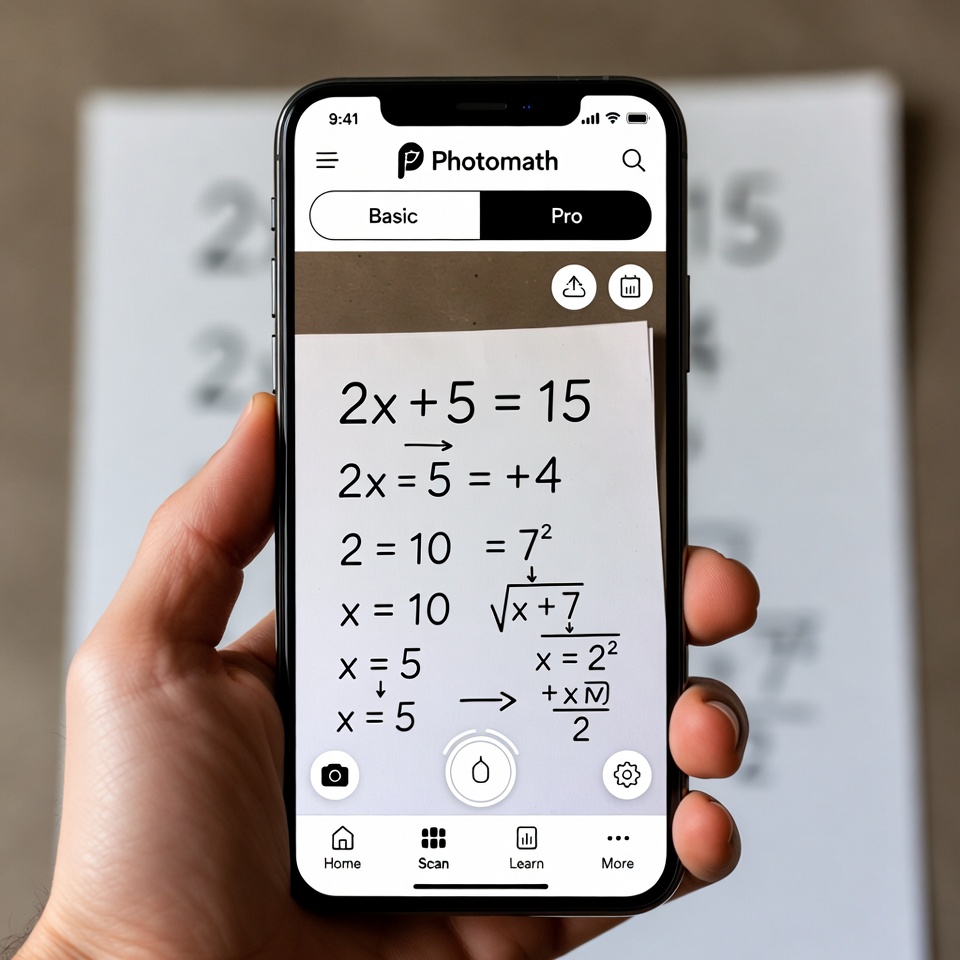
"Act as a mathematics mentor (Persona). Guide an 8th-grade student (Recipient) through solving a linear equation (Topic) by asking three consecutive guiding questions without providing the final answer (Activity). Structure the response as a series of short questions (Structure)."
This illustrates how AI can facilitate guided learning, encouraging students to think independently instead of simply receiving ready-made solutions.
Limitations and responsible use
While the PARTS framework helps in crafting clearer instructions, its use does not guarantee the accuracy or pedagogical appropriateness of the generated content. Any material produced by Artificial Intelligence requires a professional evaluation by the user, especially in an educational context, to ensure alignment with the curriculum and the actual needs of the students.