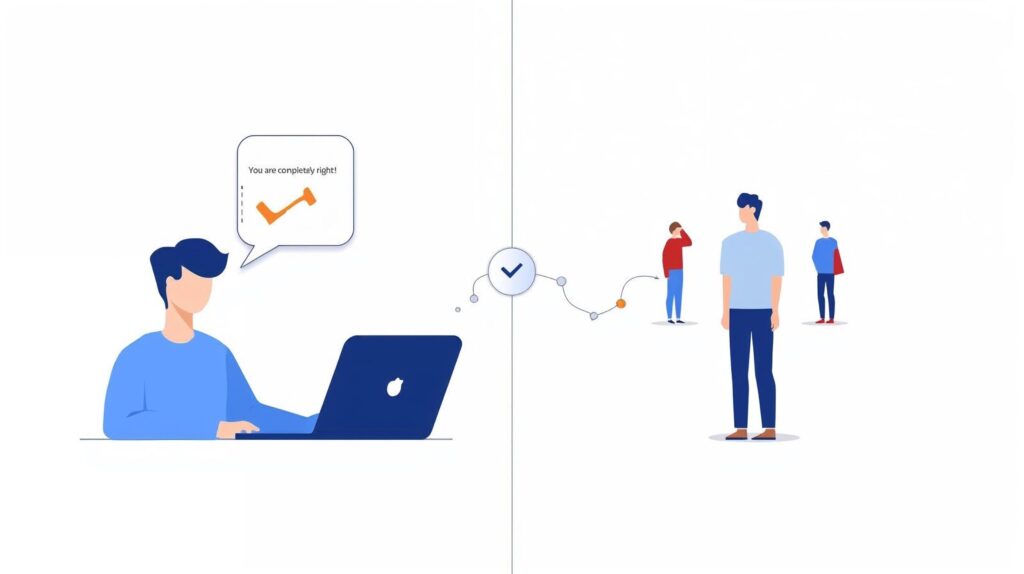


Read how the growing use of artificial intelligence (AI) tools is affecting people’s critical thinking skills, particularly through a process called cognitive offloading. Cognitive offloading refers to relying on external tools (like AI) to solve memory and problem-solving tasks, which can reduce our mental engagement and independent thinking.
This study shows that while AI tools like virtual assistants and recommendation systems make many tasks easier, over-reliance on them can hurt people’s ability to think critically and independently. Using AI to solve mental tasks means people are less likely to think deeply on their own, potentially weakening important brain skills over time. Younger people, who are the most likely to use AI, could be particularly affected. Education can help protect critical thinking skills by teaching them how to use AI wisely without over-reliance. Overall, AI should be used as a useful tool, not as a crutch that replaces thinking.
What did we learn?
Reduced critical thinking due to reliance on AI: The study found a strong negative correlation between frequent use of AI tools and critical thinking ability. People who use AI tools more often tend to do less in-depth analysis, evaluation and reasoning because they delegate these tasks to AI.
Cognitive load as a mediator: Cognitive load plays a key role in this dynamic. Using AI to outsource cognitive tasks frees up mental resources, but also reduces opportunities for active critical thinking, leading to skill degradation over time.
Age and education factors: Younger people rely more on AI and show lower critical thinking scores compared to older people. Higher education correlates with better critical thinking ability and may mitigate some of the negative effects of relying on artificial intelligence.
Educational and societal implications: The findings call for a balanced integration of AI tools in education, emphasizing that AI should complement, not replace, cognitive tasks to preserve critical thinking. Empowering students to be aware of their use of AI and encouraging active engagement can help maintain cognitive skills.
Ethical and Trust Concerns: Interview participants expressed concerns about the bias and transparency of AI, highlighting the importance of critically evaluating information generated by AI.