
Spring in Croatia is a time for monitoring and commenting on high school graduates’ applications for the selection of study programmes. Poor demographic data and surprise at the large number of programmes on offer are recurring themes. Engineering faculties are trying to maintain or increase pupils’ interest, especially girls’ interest, in their study programmes, often in cooperation with associations that in recent years have had multi-million-euro amounts available for the popularisation of STEM.
The topic expands to include questions, mostly from older people, about the impact of artificial intelligence on the labour market and education. Young people, of course, use it every day. The labour market is moving out of a period of high demand for entry-level workers. Higher education is preparing for a transformation in which there is little time to adapt.
When we place this very brief overview of the domestic situation in an international context, trends elsewhere are similar. Changes appear earlier in more developed economies than they do here. From the best, we can learn how to respond faster and more effectively, as well as about the importance of higher education’s strong ambition in creating key knowledge and a more intense sense of contribution to progress, which is then passed on to students. In other words, the question is not where I will find employment, but how I will be the best at what I do and, through what I do, make the world better.
Many universities, as well as companies, organisations and countries, use the United Nations Sustainable Development Goals to demonstrate their contribution to solving global challenges and to instil in their students the ambition to contribute greatly to this effort and to be the best. It is worth listing these seventeen goals: no poverty and zero hunger; good health and well-being; quality education; gender equality; clean water; affordable and clean energy; decent work; industry, innovation and infrastructure; reduced inequalities; sustainable cities and communities; responsible consumption and production; climate action; life below water; life on land; peace, justice and strong institutions; and partnerships for the goals.
One of the panel topics at this year’s Job Fair, organised by the student association Electrical Engineering Students’ Club and the Faculty of Electrical Engineering and Computing of the University of Zagreb, was finding purpose in one’s first job. The discussion focused on the elements of work that bring a sense of contribution, personal growth and long-term satisfaction. Our high school graduates ask themselves similar questions before choosing a study programme and faculty. What do they want to and can contribute to? What is the scope of that contribution? Can they find purpose in engineering? How is engineering changing?
Let us look at this through the example of computing. In computing, as in other branches of engineering, professional associations play an important role by adopting codes of ethics and technical standards, but also by setting the framework for education. One of the most highly regarded international associations in the field of computing, the Association for Computing Machinery, defines computing broadly and simply — as any goal-oriented activity requiring, benefiting from, or creating computers. Today, technical disciplines intertwine and complement one another. All engineers use computers, and many engineers also programme. But computing engineers are those who build computers and network infrastructure and create the digital world, thereby contributing to the solving of global challenges.
Since the 1960s, the ACM has published guidelines for creating study programmes in the field of computing, followed by good universities around the world. The current guidelines are from 2020 and define seven specialisations within computing. They can be briefly described as follows: computer engineering deals with the development of hardware and embedded software; computer science is a fundamental discipline connected with mathematics; cybersecurity is a new and interdisciplinary field; information systems deal with the collection, storage and processing of information; information technology includes the selection, development, application, integration and management of computing technologies — note that it is often linked with electrical engineering in a single study programme; software engineering focuses on the development and use of methods for designing and building software; and data science is a field connected with data analysis and data engineering.
What will computing and related technologies look like in a few years? What will the careers of computing engineers look like? These questions carry additional weight at a time of great excitement surrounding generative artificial intelligence. We can make predictions, but what do we know?
We know that expectations of a new technology usually follow a characteristic pattern — first they rise quickly, and unjustifiably, and then, after practical experience and awareness of limitations, they fall rapidly and significantly. This is followed by a “sobering up” and a more rational growth of expectations to a level justified by usefulness and sustainability. Generative artificial intelligence is being applied in all aspects of engineering work, and we are becoming aware of its capabilities, limitations and effects on work and life, including education. Ahead of us lies a period of rationalising expectations, as well as continued intense change, adaptation and growth.
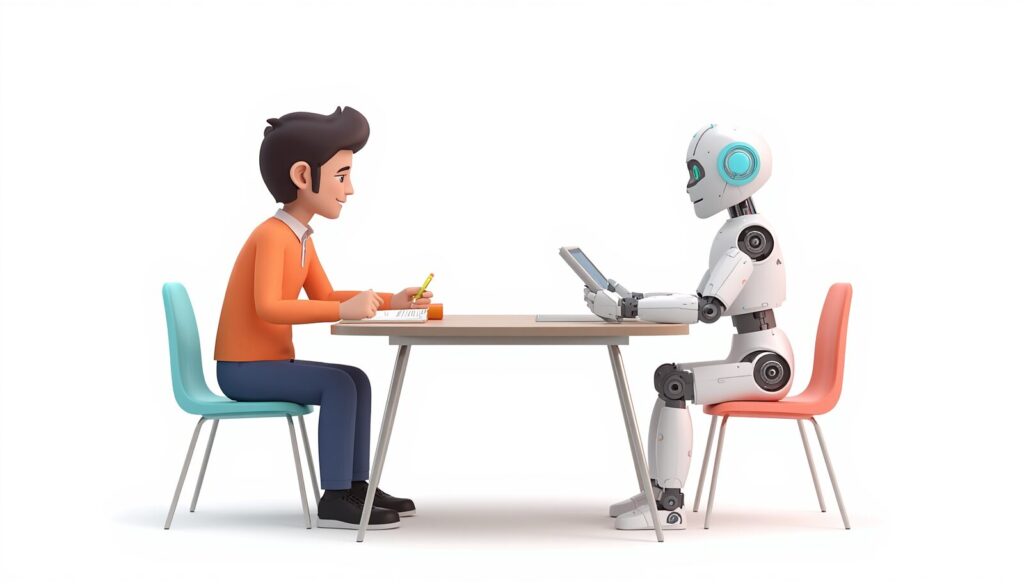
We already know that artificial intelligence effectively replaces human labour in generating, checking and refining software code. It provides power, speed and quantity. But it cannot replace wisdom, decide what should be done, evaluate whether the software code truly solves the problem, anticipate how software will behave in real conditions in which it has never been applied, or make the assessments and adjustments that will make the difference between a functional product and a useful one. That comes with experience. The value relationship has changed, and the labour market is seeking maturity. Maturity, experience and skills require time and dedication. Organisations are moving towards a model of experienced engineers with a smaller number of interns, whose main role is to develop into new experts. We are probably entering once again the era of the well-known master-and-apprentice model. How does this translate into higher education? Perhaps unexpectedly, we are returning to more thorough and deeper study. Students should be offered more practical project work, good professional internships and industry mentors. Master’s graduates should truly be “masters” of their profession.
From the past 70 years of experience with the rapid development and constant change of computing, we also know that engineers who acquire excellent fundamental knowledge, a systematic and analytical approach, and the habits and discipline of continuous learning and improvement grow alongside changes in technologies and tools and remain technological and business leaders. Computing is oriented towards multidisciplinary cooperation, in which computing engineers specialise and acquire domain knowledge, for example in medicine, energy, transport, finance or services. It is precisely this knowledge and experience that provide a competitive advantage to a person or organisation and cannot be replaced in a short time. So, even if we do not know what technology will look like, we know how to deal with it, and we know that insisting on ethics and care for people and the community guarantees well-being.
Let us return to education and to future students who want to find their purpose in engineering. Let us support them in that good decision. During their studies, they will use generative artificial intelligence. It is up to them and their professors to learn how to do so appropriately and responsibly. And they must not fail first to master the fundamental knowledge of the natural sciences and the profession, so that they can be good masters of powerful tools. That is irreplaceable!
To realise their potential and be the best at what they do, future students should choose study programmes and faculties that will instil in them an ambitious attitude and provide excellent competencies through modern teaching. They should choose those where they will have globally relevant mentors connected with prestigious academic institutions and companies; where they will have opportunities to work on challenging projects with international partners, opportunities for internships, mobility and participation in international competitions; where they will develop entrepreneurial courage; and where they will have a sense of contribution and personal growth.
Croatia has such engineering faculties and study programmes. We are waiting for you.