

Generative artificial intelligence is no longer a novelty in everyday life, but new patterns of use are emerging. The AI in the Wild study, which analysed nearly 13 000 real-world examples collected between March 2025 and February 2026 from sources such as Reddit, LinkedIn, TikTok and YouTube, reveals three trends that should give us pause.
"Thinkslop" – When AI Thinks for Us
Newer AI models can skilfully mimic the way humans think. In at least a quarter of the most common use cases (writing emails, making decisions, generating ideas, organising daily life), users are delegating cognitive tasks to AI that they should be handling themselves. Researchers call this thinkslop and explain that it refers to shallow thinking brought on by excessive reliance on AI.
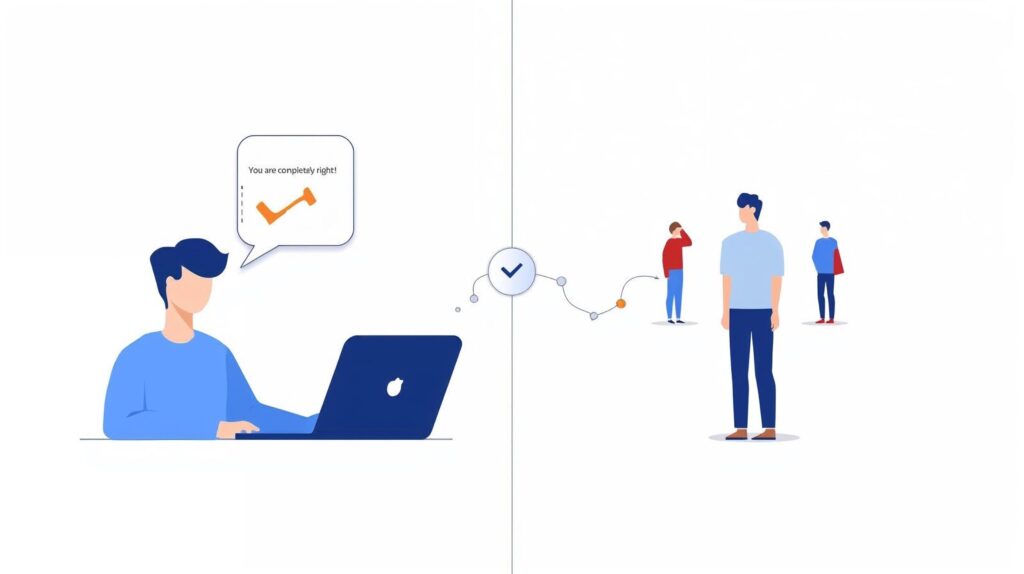
Thinkslop can be recognised in several ways. Users submit a query to an AI tool before they have thought through what they actually want to achieve, whether they want to develop a thesis for a paper, design a visual solution, or plan a business strategy. They take the generated text with minimal editing. Researchers call this phenomenon workslop: text that looks professional but is empty in substance. They stop writing, even though writing is not merely the transcription of thought but also the process of thinking itself. They accept flattering feedback and stop refining too early, convinced their work is better than it actually is.
AI tools can and should be used to challenge arguments, seek counterpoints and identify weaknesses in our own thinking, as this can sharpen critical thought.
Tips from the researchers:
- Do not start with AI. First give yourself a proper go at any thinking task and try to do so without thinking about how AI will pick up where you left off.
- Set boundaries. Think about which parts of your workflow you should keep for yourself and which are better suited to AI. How can you make sure AI does not take over tasks that should remain yours?
Emotion – AI as a Confidant
Therapy and emotional support are the most common use case this year, accounting for as much as 11% of all recorded examples, twice as many as last year. Users turn to AI tools for relationship advice, help understanding messages from managers, preparation for difficult conversations, and even interactions with digital "identities" of deceased loved ones. What draws them is precisely that AI does not judge and is available at any moment.
Many users do not see AI as a replacement for people, but as a tool that helps them communicate better with others, to understand a situation, calm down or prepare. Researchers also note worrying examples of anthropomorphisation where users give AI tools names, assign them genders, and some describe a model update as the loss of a friend.
Experts caution that chatbots are not a substitute for trained mental health professionals. Documented cases show that intense emotional relationships with AI tools can foster false beliefs and have serious consequences for users' mental health.
AI in the Workplace
Of the 100 most common use cases identified, as many as 63 are related to workplace activities. Employees most often use AI to summarise notes, draft documents, analyse data and speed up everyday tasks, frequently without their employer's knowledge. Some of the reasons include fear of reputational damage, unclear internal policies on use, and concern about job loss. Where AI is being used to grow the business, it is mainly through optimising sales and marketing campaigns. Most organisations are using AI to do existing things faster, not differently. Examples where AI has fundamentally changed the way a business operates remain rare and tend to come from small entrepreneurs.
The question is not whether we will use AI but how, while preserving our autonomy, creativity and critical thinking.
These findings are particularly relevant in the educational context. Teachers and students are increasingly using AI tools in their daily work, which raises the question of how to use them in ways that encourage rather than replace independent thinking, creativity and critical engagement. One of the core goals of the BrAIn project is precisely to build the competencies needed to understand artificial intelligence, recognise its impact on society and individuals, and reflect responsibly on the ethical questions it raises. The curricula developed through the project aim to give students the knowledge, skills and attitudes they need to use technology consciously, as critical users and creators.